








Blown Film Winder: Precision Winding for Superior Film Rolls
At the end of a blown film production line, the winder plays a crucial final role. An efficient, stable winder not only ensures that the finished film is wound into flat, secure rolls but is also key to determining the final product quality and the ease of subsequent processing. A perfectly wound roll can significantly improve the efficiency of printing, laminating, and bag-making processes.
This article will introduce the types of blown film winders, their key technologies, and how PLASTAR's advanced solutions can help you achieve perfect winding quality.
What is a Blown Film Winder?
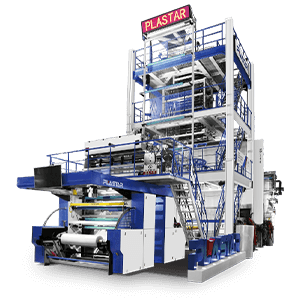
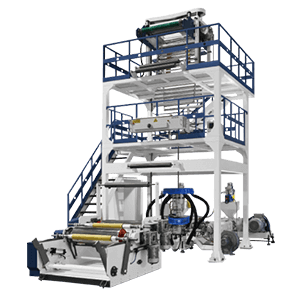
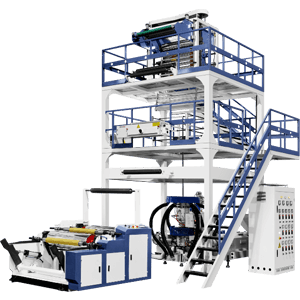
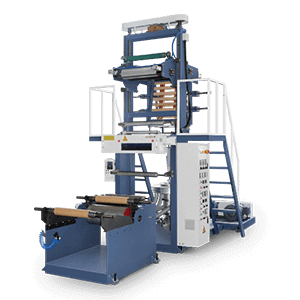
A blown film winder is the equipment installed at the final stage of a blown film line. It is responsible for continuously and accurately winding the cooled, collapsed, and flattened film onto a core, creating uniform finished rolls. The PLASTAR series of blown film winders is the culmination of precision mechanical design and intelligent electronic control systems, designed to provide unparalleled winding stability and ease of operation, ensuring every roll of film meets the most stringent quality standards.
Winder Types
To meet different production capacities, space constraints, and application needs, blown film winders are mainly divided into the following types:
- Vertical WinderThe structure of this winder is stacked vertically, making it ideal for production environments with limited factory space. Its compact design effectively saves floor space while providing stable and reliable winding performance, making it an excellent choice for small to medium-sized production lines.
- Back-to-Back WinderThis is currently the most efficient and mainstream design on the market. It features two winding stations arranged back-to-back. While one station is winding, the operator can prepare for roll doffing and new core loading on the other. Paired with automatic roll change functions, it can achieve nearly continuous, uninterrupted production, making it the standard for high-speed, high-capacity production lines.
- Manual WinderA manual winder is a structurally simpler and more economical option. It requires the operator to perform cutting and roll changing manually. Although it has a lower level of automation, it remains a very practical and reliable solution for applications with lower output demands, frequent product specification changes, or limited budgets.
Key Winding Technologies Explained
To achieve a perfect roll, modern winders employ several sophisticated technologies, but the process begins with a well-designed blown film die that ensures consistent film properties. Understanding these is key to appreciating the quality of the final product.
- Surface Winding: In this mode, the winding roll is driven by direct contact with a driven drum. The nip pressure between the drum and the roll helps to expel air that might otherwise get trapped between the film layers. This method is excellent for producing hard, stable rolls and is particularly well-suited for non-stretch or slippery films.
- Center Winding: Here, the winding shaft itself is driven, pulling the film onto the roll. Tension is precisely controlled by adjusting the torque applied to the shaft. Center winding is ideal for delicate, sensitive, or soft films that could be damaged by the pressure of a surface winder.
- Gap Winding: This is a variation of center winding where a small, controlled gap is maintained between the winding roll and a driven drum. The roll is still driven by its core, but the nearby drum helps stabilize the film and remove air. This hybrid approach is highly versatile and can be used for a wide range of materials, offering a balance of roll density and gentleness.
PLASTAR winders can be configured with the optimal winding mode to perfectly match your film's specific properties.
Features of PLASTAR Blown Film Winder
PLASTAR's winders are meticulously engineered to deliver exceptional performance and long-term reliability by integrating advanced control systems with robust mechanical design. This synergy ensures that every feature contributes to producing a higher quality final product with maximum efficiency.
- High-Precision Tension Control: Utilizes an advanced closed-loop system with load cells to continuously measure and adjust film tension, helping maintain film stability alongside critical parameters like the blow up ratio. This ensures consistent tension throughout the entire winding process, from an empty core to a full roll. This effectively prevents film stretching, wrinkling, or telescoping, guaranteeing roll hardness and flatness.
- Multiple Winding Modes: Offers various modes including surface, center, and gap winding, which can be flexibly switched according to the film's characteristics (such as thickness, slipperiness, elasticity) to ensure optimal winding quality.
- Intelligent Operating Interface: Equipped with a user-friendly Human-Machine Interface (HMI) touch screen. Parameter settings are intuitive and easy to understand, allowing operators to easily monitor winding status, adjust parameters, and perform troubleshooting.
- Robust and Stable Machine Structure: The machine body is constructed from high-rigidity materials and precision machining, ensuring stability even at high operating speeds, effectively suppressing vibrations and guaranteeing winding accuracy.
- Automation and High Efficiency: Our back-to-back winders can achieve fully automatic roll changes and cutting, significantly reducing labor requirements and changeover time, leading to a notable increase in production efficiency.
Applications & Film Compatibility
PLASTAR's blown film winders are highly versatile and can perfectly handle various types of films, including:
- High-Density Polyethylene (HDPE) films, such as for T-shirt bags and shopping bags.
- Low-Density/Linear Low-Density Polyethylene (LDPE/LLDPE) films, such as for shrink film, agricultural film, and heavy-duty sacks.
- Polypropylene (PP) films.
- Multilayer co-extrusion barrier films, such as for food packaging and vacuum bags.
- Recyclable and biodegradable eco-friendly films.
Technical Specifications
| Specification | PLASTAR Standard Models |
|---|---|
| Effective Film Width | 800 mm - 3000 mm (Customizable) |
| Max. Winding Diameter | 800 mm / 1000 mm |
| Max. Mechanical Speed | Up to 150 m/min |
| Applicable Film Thickness | 0.010 mm - 0.200 mm |
| Tension Control System | Closed-Loop Load Cell Control |
| Winding Shaft Type | Air Shaft |
Note: The above specifications are for standard configurations. We offer customized solutions to meet your specific production needs.
Optional Add-ons
To further enhance the functionality and automation of your production line, PLASTAR offers a range of optional equipment:
- Slitting Unit: For in-line slitting of the film into multiple narrower rolls.
- Edge Trim Removal System: Automatically collects and removes trimmed edges.
- Core Loading System: An automated system for loading new cores onto the winding shaft.
- Finished Roll Unloading System: Assists in the safe and easy removal of heavy, finished rolls.
- Web Guide System: Ensures precise alignment of the film before it enters the winder.
Case Studies
Based on the customer’s internal production records, changeover downtime was reduced by approximately 80%, while overall production output increased by around 15%. The improved winding efficiency also helped the customer respond more quickly to short-run orders and changing production schedules.
The solution was particularly suitable for flexible packaging film manufacturers requiring frequent roll changes, stable production, and better utilization of labor and equipment.
Key Results
- Approximately 80% reduction in changeover downtime
- Around 15% increase in overall production output
- Reduced manual intervention during roll changes
- Improved production continuity and scheduling flexibility